 To finish our study and truly begin to understand how the Orthodox Church developed, we need to take a close look at Valentinus, who will play a large part of in verbal war of doctrine with Irenaeus and Orthodoxy. I will discuss the life and beliefs of Valentinus first, followed by Irenaeus, and then the exchange between the two as documented by later church fathers such as Tertullian. [Read more…] about Valentinus, the Bridal Chamber, and Meditation: Part 5 of the Development of the Orthodox Church
Consciousness
Jesus said to Watch for the Thief
 Matthew 24:42-44 is an interesting scripture. In it Jesus tells us to watch for the Son of Man. He follows that command by telling us that if the good man of his own house had watched, he would have been ready for the thief who comes to break up the house. Therefore, watch, for none know the hour that the Son of Man comes.
What does this mean?
Traditionally, this scripture has been interpreted to mean that we must be vigilant for the second coming of a literal Jesus, but is this what Jesus’ saying really meant? [Read more…] about Jesus said to Watch for the Thief
The Lord’s Supper and Psalm 23 Translation
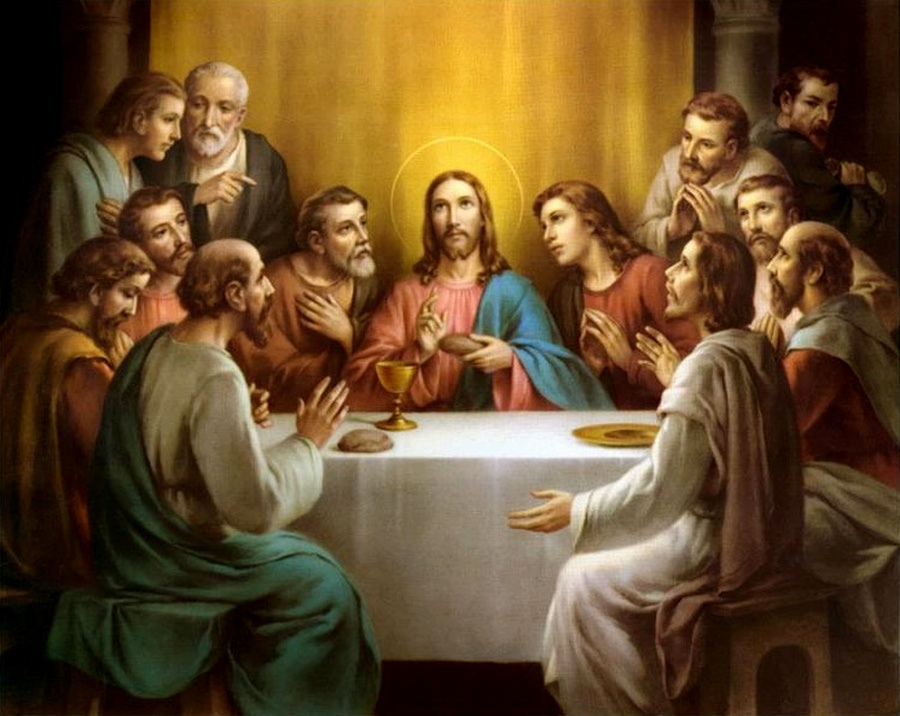 As beautiful as the Lord’s Supper ritual is, apart from a few ceremonial words and bowing of heads at Mass, there isn’t a non-ceremonial equivalent of this life-changing event at the everyday practical level. The application of Psalm 23, I feel, is the nearest opportunity to participate in something as a means of growing Christ dynamism, cosmic understanding, and greater spiritual abundance in our daily lives, from work or home.
Psalm 23 translation follows later in this article.
Mainly referred to as the Last Supper, this most solemn event in most formal religions is about receiving the blessed Eucharist, thereby celebrating Christ-empowerment, which I totally respect. But, for the purpose of this article, the latter title of the Lord’s Supper is the one being referred to. [Read more…] about The Lord’s Supper and Psalm 23 Translation
The Dark Night of the Soul

The term “Dark Night of the Soul” is the title of a poem by Saint John of the Cross, a 16th century friar of the monastic order of Carmelites in Spain. He was a leading Spanish poet and religious reformer in his time. The Dark Night of the Soul is a message about travail and hope in the journey of the soul towards union with God. It represents one of many threads of esoteric belief winding through the tapestry of [Read more…] about The Dark Night of the Soul
The Four Living Creatures and The Gospels
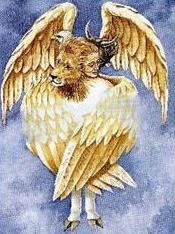 The passages in Ezekiel describing The Four Living Creatures are mysterious and phantasmagorical. They are open to interpretations of all varieties, exoteric and esoteric. The Books of Daniel and Revelation also contain surreal images, but most of them are not as complex and elusive, and the symbolism is usually more obvious. For instance, Daniel’s vision of the various kingdoms that arise to rule his known world can be related to historical kingdoms. [Read more…] about The Four Living Creatures and The Gospels
“Who do you say that I am?” Part 11
 Jesus said: “To him who overcomes (the ego-world), I will give a New Nature.”–Rev 2:17
“Revelation”, as we know, dramatically covers the seven seals — chakraic awakening leading to Ascension into Christ consciousness.
So what is this New Nature and what are the white stones mentioned in “Revelation?” [Read more…] about “Who do you say that I am?” Part 11
“Who Do You Say That I am?” — Matthew 16: 13-17 –Part I
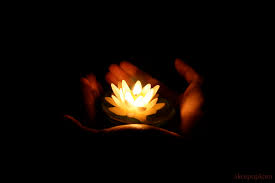 Is this The most profound Question in the Bible?
By examining this question, the answers will reveal how we can identify who we really are and how we can embrace it wholeheartedly.
For now, let us relax and explore together this most wonderful of questions: “Who do you say that I am?” [Read more…] about “Who Do You Say That I am?” — Matthew 16: 13-17 –Part I
Understanding the Messianic Prophecies, Part III
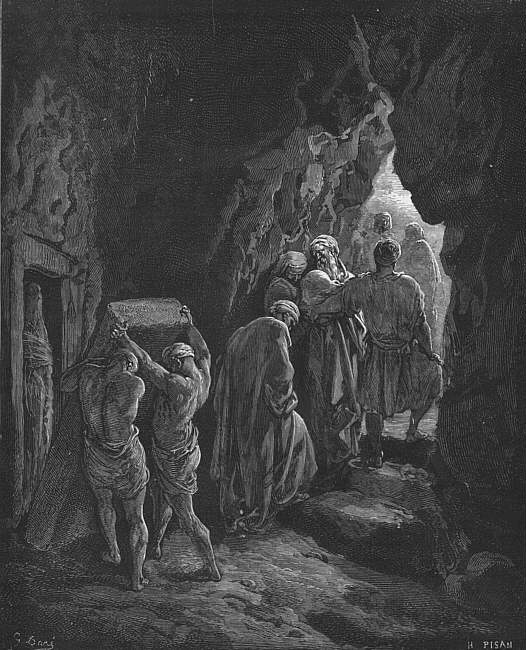 In this series we will continue to perform a temporary “about face” in our quest to discover wisdom. By reassessing the historical and literal validity of selected parts of the bible, we shall try to answer four questions. (1) Is the Messiah of the Gospels merely of allegorical importance, as one sect of the first century Gnostics proposed? (2) Does history and archeology regarding the Jewish people validate the existence of a flesh and blood Messiah? (3) Did this Messiah atone for the sins of others? (4) Do historical and allegorical messages in the bible oppose or complement each other? I shall explain later why the “about face” is necessary and only temporary. [Read more…] about Understanding the Messianic Prophecies, Part III
An esoteric interpretation of the crucifixion of Jesus
 At the moment we live in the period leading up to Passion Week again, and therefore I would like to give an explanation of some of the names and words that figure prominently in the Passion story, interpreted from the hidden meaning of the Hebrew translation of these words, as they already explain what this story is really about. [Read more…] about An esoteric interpretation of the crucifixion of Jesus
Clearing The Way to Christ-Consciousness
 “The Apostles got into the Boat and went to the other side.”
—Matthew 14:22
Keep this scripture in mind as we weave our way through this article. We shall return to it later.
For centuries, like beavers, man has been building dams, blocking his or her divine nature. Consequently, so many people in the world today are living their soul-potential unconsciously, as conscious ignorance or inverted bliss. [Read more…] about Clearing The Way to Christ-Consciousness
On the Sacred Path with Gilgamesh and Enkidu
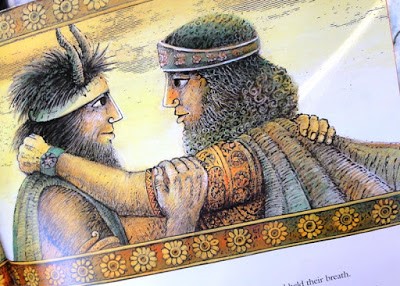 How much of the bible is derived from stories told by cultures more ancient than itself? In my previous post “The Flood: Biblical vs. Mesopotamian Narratives” we found so many similarities in detail between Noah’s Ark and the flood story in the Epic of Gilgamesh. The dimensions of the vessel, the use of birds to tell when the land became dry, the performance of sacrificial rites after landing, and so on, were all alike. The moral of the stories differ, of course. Noah and his family learn about God’s grace amidst judgment, whereas Gilgamesh learns humility in light of man’s earthly mortality. [Read more…] about On the Sacred Path with Gilgamesh and Enkidu
The Tree of Judgement?
 One of the themes in the Bible that has always fascinated mankind is that of the Garden of Eden and the tree of the knowledge of good and evil, with the serpent lying on one of its branches.
During the period of October 2013 – January 2014, I wrote a series of articles for SOS, mostly about the esoteric interpretation of Bible texts, based on Hebrew numerology. In at least five of these articles this theme of the tree of the knowledge of good and evil and the serpent was examined, each following article building on the findings of the previous ones. [Read more…] about The Tree of Judgement?
Jacob, Leah, Higher Consciousness, DMT, and the Pineal Gland
 A few years back I wrote a post about Jacob meeting God at Peniel. Jacob called the place of meeting Peniel because the Hebrew term means “face of God.” In that post we also discussed that Peniel, although a different spelling, can be associated with the pineal gland in the center of the brain. Jacob met God face to face at Peniel because the text is alluding to the mystical experience of activating the pineal gland through kundalini. The pineal gland is sensitive to this subtle yet powerful energy that science cannot yet measure. [Read more…] about Jacob, Leah, Higher Consciousness, DMT, and the Pineal Gland